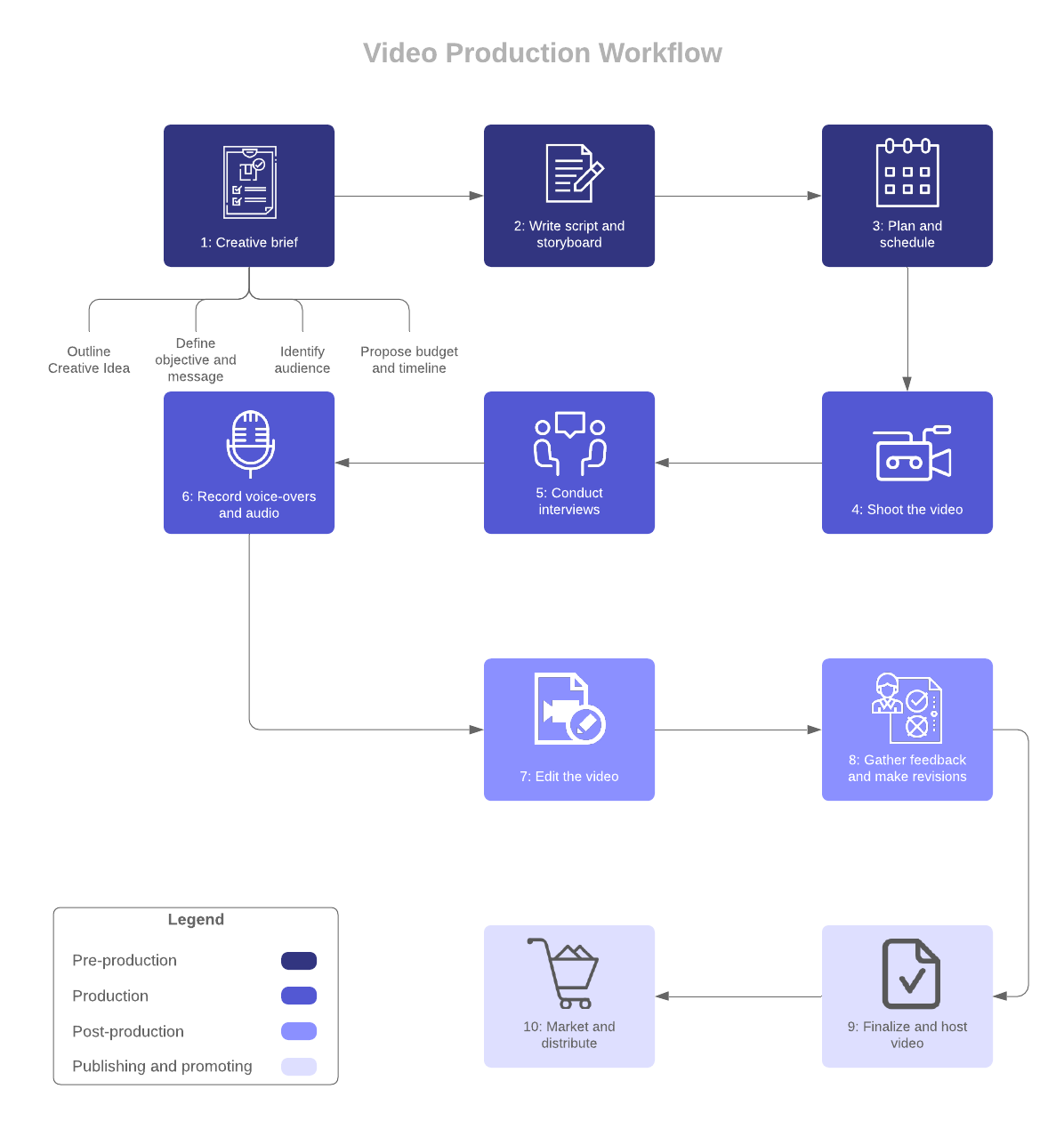
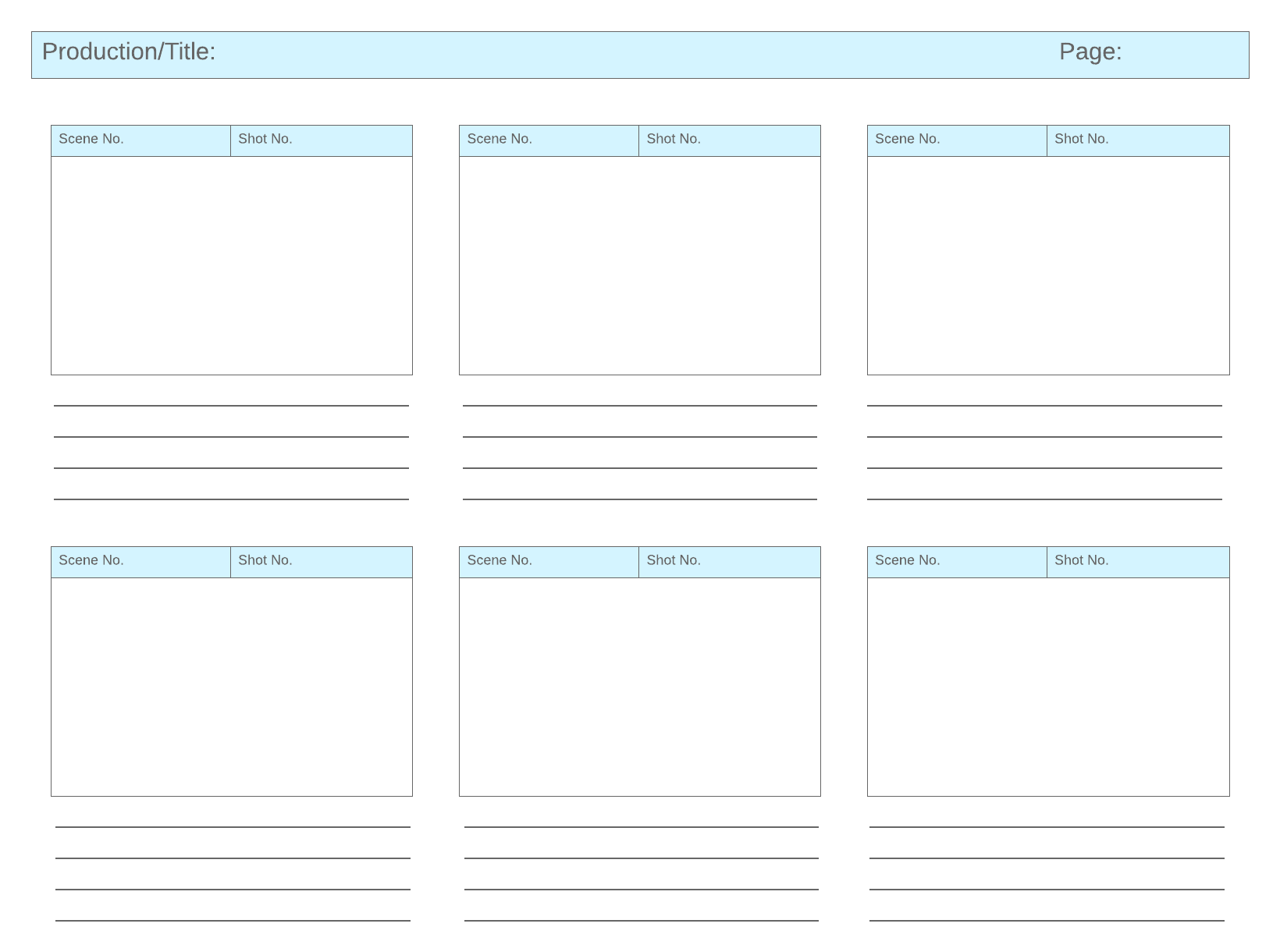
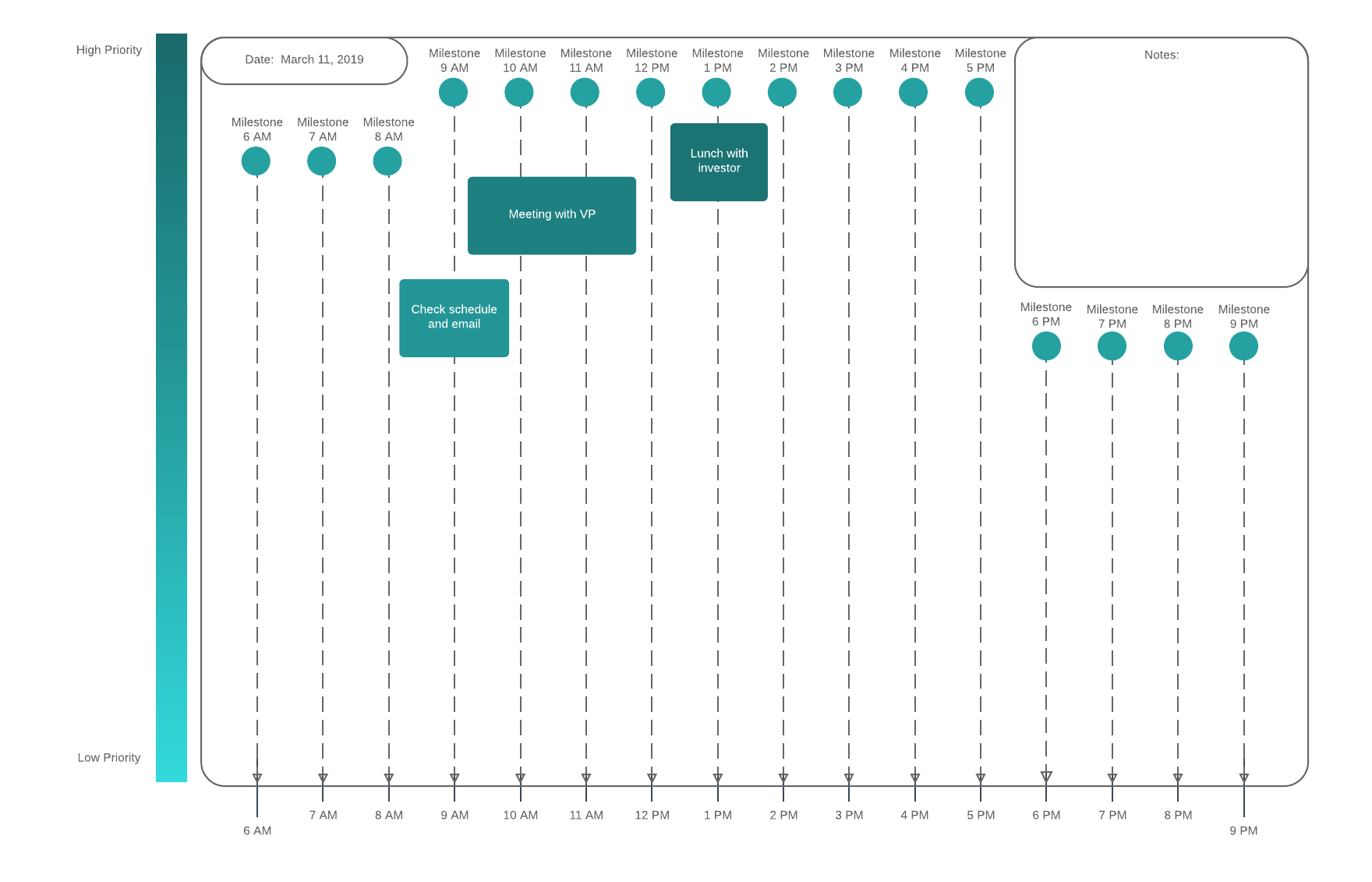
This process involves building a team (e.g., writers, director, video editors, sound engineers, etc.), prepping or scouting the shooting location, casting, licensing and permissions, and outlining your contingency plans.
Pre-production is an important part of the video production pipeline. Mapping out these steps in a clear workflow will help you build a strong foundation for your content.
Production
Production is where all your plans come together to bring your video to life.
This stage includes:
- The shoot
- Set up, lighting, sound, filming, logging shots
- Capturing b-roll
- Conducting interviews
- Recording voice-over audio
For production to go smoothly, you’ll need both a good workflow and a good project manager to make sure each creative element is captured and ready for post-production.
Post-production
Post-production is often the unsung hero of video production. This is the stage where all the film and sound has been shot and recorded in its raw form and is ready for an editor’s magic touch.
During post-production, the video will go through an editing process (which includes adding graphics or visuals, sound mixing, and adding voice-over if needed) and one or more rounds of feedback and revisions before final sign-off and approval.
A high-level workflow for each of these steps can help teams communicate effectively and stay on the same page as they provide feedback and move towards the final deliverable.
Publishing and promotion
The last stage is to publish and promote video content. Exactly how you do this will depend on your specific strategy and goals for the video. However, this milestone typically includes the following steps:
- Finalize, format, and host the video in your desired location.
- Track analytics to measure success and ROI.
- Market and distribute.
How you promote your video will be based on your outlined strategy. Here are a few ways you could promote and distribute your content:
- Share on social media.
- Distribute through paid ads.
- Use PR to spread the word at different outlets.
- Incorporate video into your marketing (email, onsite, etc.).
With your strategy as a guide, you can build a video production workflow that outlines when and where to distribute your video and assign who is responsible for each task.
Building an effective video production pipeline
Now that you understand the steps involved in the production process, you can develop a workflow that makes sense for you and your team. Use the following tips and best practices to create a successful video production workflow.
1. Create repeatable processes
The more you can systemize your processes the better. Look for opportunities to standardize and automate processes.
Having repeatable, standard processes throughout each stage of the production pipeline not only increases efficiency, helping you meet deadlines and budget constraints, but it also keeps everyone on the same page.
2. Assign a point person to manage it
Projects quickly get derailed if there isn’t a project owner to lead it. Make sure you have a video production manager who can act as point person for each stage of the process.
They should be able to delegate and communicate effectively across teams to keep the project on track. This is especially important if you’re working with contractors, freelancers, or distributed teams who are juggling their own schedules, timelines, and objectives.
A designated point person can make sure each contributor knows what is expected of them, when they need to deliver, and can guide them to any resources or contacts they may need.